David Story, Online Piano Lessons from Toronto
  • Homepage
  • Tips, Ideas, Stories, Free Lessons
  • Contact form, fees, calendar, policies
  • Adult Lessons
  • About Me
  • Children Lessons
  • Jazz and Blues Workshops 2024 2025
  • Philosophy
  • Testimonials
  • Student awards and compositions
  • Classical downloads
  • Classical outline for beginners
  • Jazz and Blues Downloads
  • Jazz outline for beginners
  • Children's Piano Recital
  • Video Library of Piano Techniques
  • Breakfast Piano Minute
  • Books, Apps, Websites, Music
  • Ear Training and Sight Singing Resources
  • My YouTube channel
  • Chord Voicings for Jazz Standards
  • Long and McQuade Teacher Workshop 2024

Tips, free lessons, and inspiration

​How I learned to play the xylophone and the Malletkat

11/7/2025

0 Comments

 
Picture
Here are the dozen steps I’ve taken to teach myself to play these instruments. Cavet: I’m not going to be turning professional. But I do play in ensembles that I’m not embarrassed to invite my students to experience. And, I’m having fun!
  1. I really wanted to learn to play them.
    1. Bassist Rory Slater said I’d be great on the things. That boosted my confidence to give it a go.
    2. During the lockdown I purchased a used xylophone for $600 and started whacking the thing with 2 mallets. I was instantly hooked playing early jazz and ragtime. You can see the early results below.
    3. I wanted to assess the validity of my teaching advice. Does it work? (It did.)
  2. I knew the scope of the jazz field from my 50-year career as a professional musician and educator.
    1. My 1st experience hearing live mallets was as a first-year student at Berklee listening to Hendrik Meurkens play be-bop and continued with my discovery of Gary Burton, a Berklee educator.
  3. I knew the repertoire from playing the piano.
  4. I knew the harmonic material that I would need to master.
    1. Scales
    2. Chord voicings, inversions, substitutions etc.
    3. Arpeggios
    4. Licks
  5. I knew that to succeed I would need to always practice musically. I would not make the beginner mistake of “learning the piece” and then adding the expression.
  6. I used a metronome in practice.
  7. I video taped and/or recorded all my practices so that I could evaluate my progress.
  8. I found groups to play with.
  9. I learned how to hold the four mallets watching Gary Burton on YouTube.
  10. I practiced regularly and I practiced a lot.
  11. When I got the Malletkat I modified it to play more musically.
  12. I had a couple of lessons with Rick Dior who seconded all the steps above.
  13. I listen to jazz mallet players. I've discovered all sorts of forgotten musicians like Dave Pike and Emil Richards. 
If I can help you on your piano journey, call me.
David

Limehouse Blues. An early attempt during the lockdown. 

Picture
0 Comments

Memorising Blues Tunes In A Hurry

9/24/2025

0 Comments

 
Picture

The Blues Are Calling

Audition Prep for a Blues Band
I've been invited to audition for a blues band that’s looking for a keyboard player and an occasional sub on drums. It sounds like a blast—and I’m diving in headfirst.
Here’s how I’m preparing, and the thought process behind it:
  1. Motivation & Connection I’m driven to succeed and confident in my skills. What sparked this? The drummer—who played in my first professional band 48 years ago—mentioned over lunch that his current band might need a new keyboardist. They’ve got gigs lined up. I said I was available, and he sent me the set list.
  2. Charting the Tunes I’ve created roadmaps for each song, outlining form, chords, and riffs. Just three tunes left to chart!
  3. Gear Upgrade Sold some old equipment and picked up a keyboard that’s perfect for the gig.
  4. Daily Practice & Score Corrections Each evening, I play along with the recordings and refine the scores. My Berklee buddy Kai spotted a wrong note in one of my charts. Later, I found even more passages that needed tweaking.
  5. Leaning on Theory & History Blues isn’t foreign territory—I know the style well and can anticipate musical turns thanks to my background in theory and history.
  6. Immersive Listening I made a playlist of the set on my phone and have already listened to it twice in the past 24 hours.
  7. Scoring by Ear Transcribing by ear has been a game-changer. Writing it out helps me internalize and memorize the tunes faster.
  8. Embracing the Adventure I’m excited to step out of my comfort zone, make some noise, and relive the smoky bar days with fellow musicians.
  9. Targeted Practice I focus only on the tricky sections—no time wasted on what I can already play or fake convincingly.
  10. Rest & Recovery Upped my sleep schedule. This is intense work, and I want to stay sharp.
  11. Self-Recording Starts Tonight I’ll begin recording myself playing along with the tracks to fine-tune my performance.


Picture

How could you use these steps in your own musical journey?

Ten Tips for Meaningful Piano Progress

Whether you're just starting out or deepening your craft, here are some guiding principles to help you stay motivated and make real progress at the piano:
  1. Find Your “Why” Have a compelling reason to succeed—something strong enough to carry you through the ups and downs of the journey.
  2. Listen Deeply Study professional recordings of your repertoire. Pay attention to the nuances: phrasing, dynamics, tempo choices, and emotional delivery.
  3. Respect Your Instrument Play on a well-maintained piano. An instrument in poor condition can be discouraging and hinder your growth.
  4. Record & Reflect Record yourself regularly. Compare your performance to the score, and later, to professional interpretations. It’s a powerful tool for self-awareness and improvement.
  5. Study Theory & History Understanding the structure and historical context of the music makes it easier to memorize and interpret with depth.
  6. Curate Your Repertoire Keep a playlist on your phone of current, past, and future pieces. Listening often helps internalize the music and keeps you inspired.
  7. Train Your Ears Ear training is essential. The better your aural skills, the more intuitive your playing becomes. The Royal Conservatory of Music has a terrific program at each level of skill.
  8. Stretch Comfort Zones New material will always present challenges. To stay encouraged, begin and end practice sessions with pieces you love and know well.
  9. Practice Smart Focus only on the tricky sections. Don’t waste time on what you can already play confidently or fake convincingly.
  10. Be Kind to Yourself Progress takes time. Rest well, stay patient, and trust the process. If you are not sure on what the process consists of borrow some books from the library on teaching piano. You'll aquire insight there. 
If I can support you on your musical journey, feel free to reach out.
Warmly, 
Picture
0 Comments

Wilbert Harrison's Kansas City Piano Accompaniment

1/16/2023

0 Comments

 
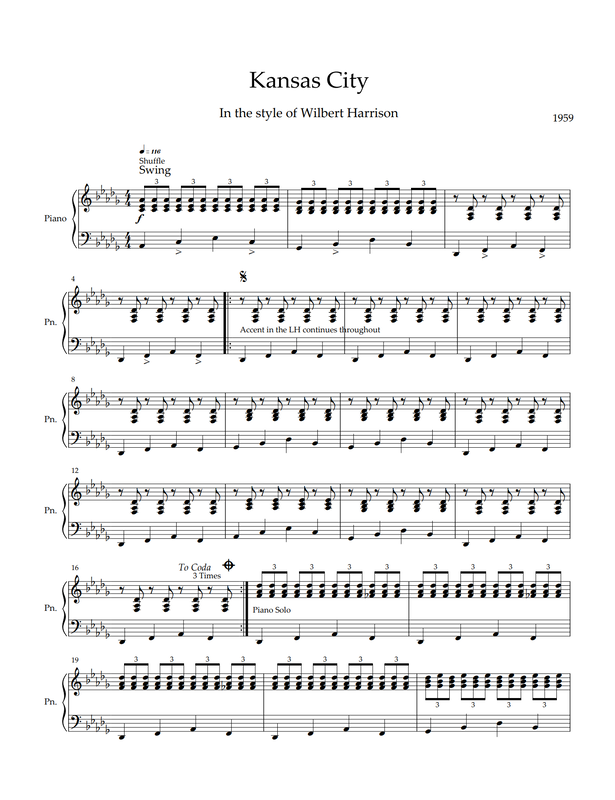
This performance of Kansas City by Wilbert Harrison is a fine example of blues boogie woogie accompaniment and soloing. It features a simple rhythmic pattern between the hands and an easy riff-based solo. The one unusual aspect is his choice of key: Db major. (I've provided two written versions for you in Db and C)

Preparations.
  1. Watch the video.
  2. Print out the music or open it on your tablet.
  3. You will be playing along so you will need ear buds or a speaker to amplify the YouTube video. 
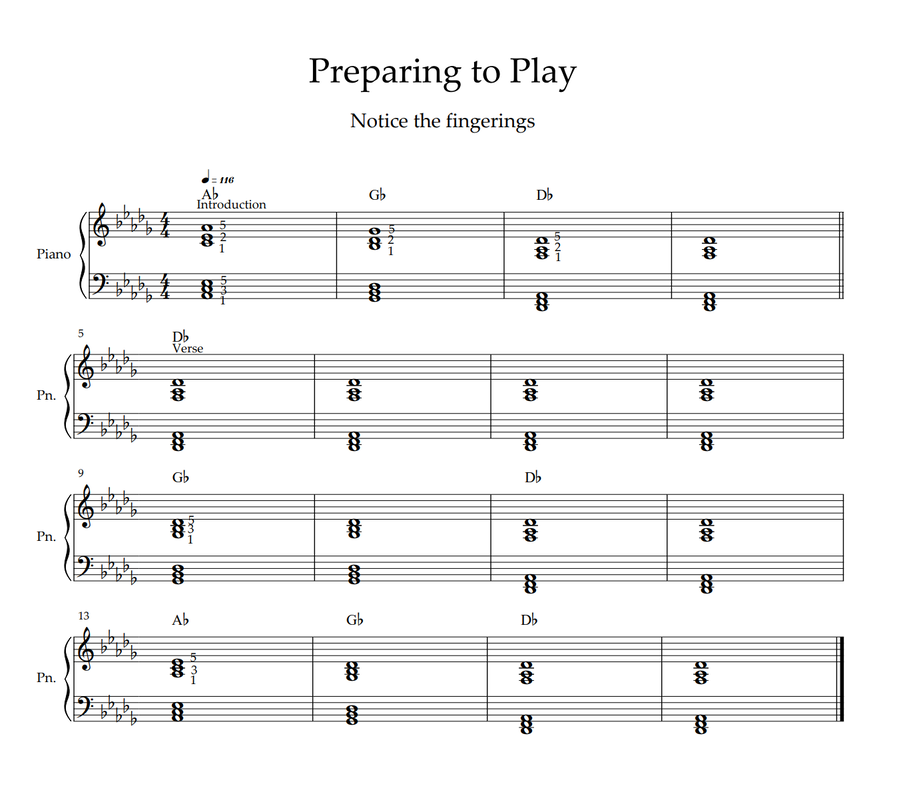
  4. Prepare the three chords of this piece: Db, Gb, and Ab major by reviewing the music below. (The left hand plays these chords in root position. The right uses the various inversions)
Picture
Chords in C
Chords in D flat
Next steps. 
​
4. To create a strong mental impression of how the music will be played follow the score while listening to the video. Notice he plays a heavy accent on beats 2 and 4 in the left hand and aggressively accented chords in the right. 
5. Start practicing the score by playing slowly while keeping your attention on the correct fingering of the chords. 
6. To get the swing of the music, play along with the video. If necessary, slow the video down.

7. Have fun.

Harrison plays a remarkably similar piano part in his video of Stagger Lee. Can you hear the similarities? The link is below. 
​
​If you would like some help with this, call me. 


David
Stagger Lee YouTube video
Picture
Free Piano Score D flat
Free Piano Score in C
0 Comments

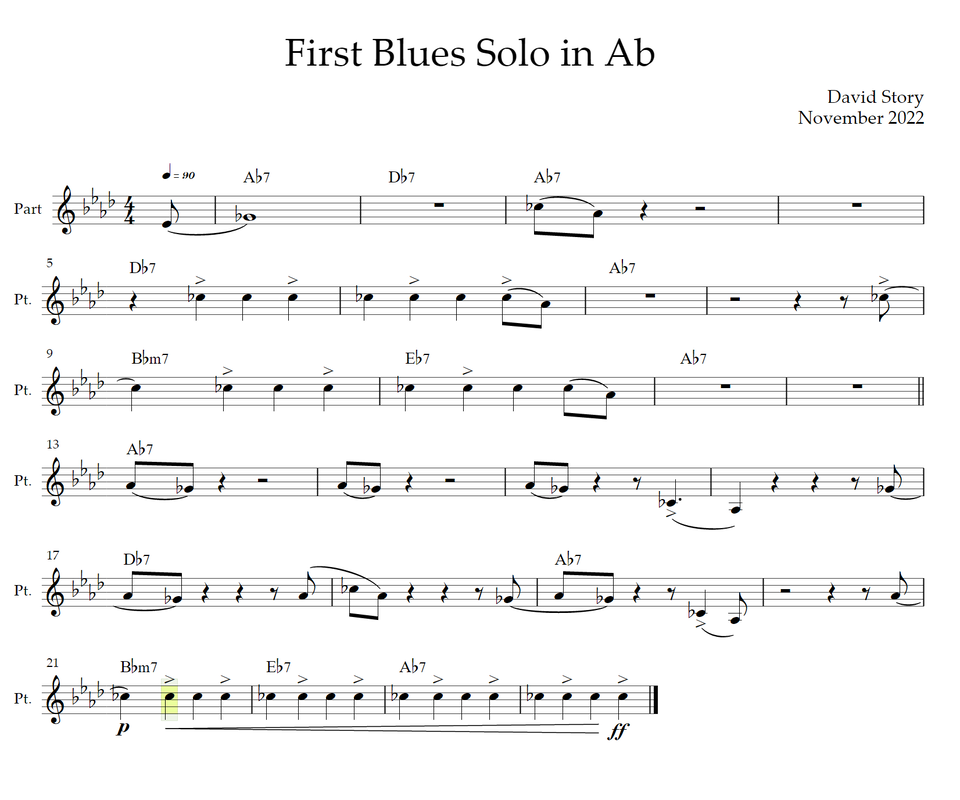
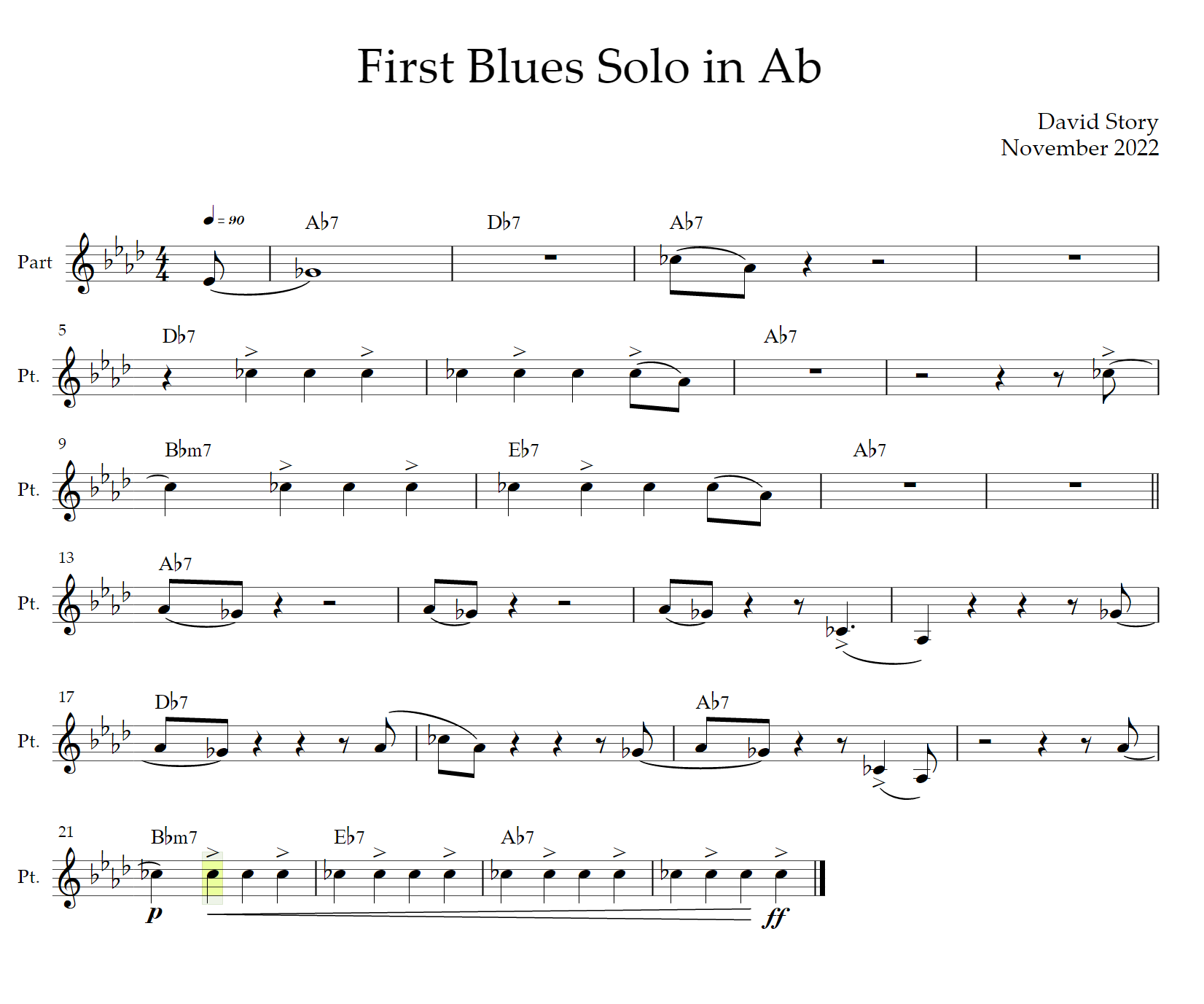
Beginner Blues Solos in Ab major

11/24/2022

0 Comments

 
Picture
score download
Picture
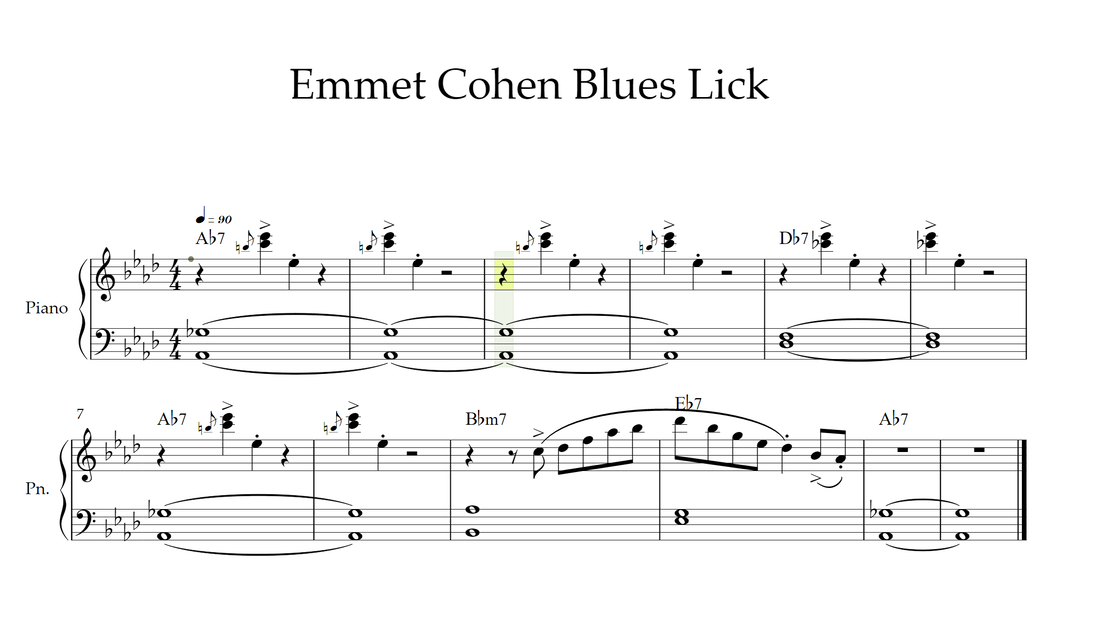
Free Score for Cohen Blues Lick
What is the Blues?
0 Comments

How to spend an hour at the piano

6/10/2017

0 Comments

 
Scales, chords, arpeggios, reviewing some favorites, work on your new pieces, sight reading, ear training, and for jazz musicians there is always transcribing. Whew! Sometimes it is all a bit much. Sometimes the best use of an hour is just too...
  1. Fiddle around
  2. Jam with friends
  3. Improvise
  4. Put on the headphones and listen deeply to some of your favorite music. 
  5. To go to the music store and explore the music racks for something inspirational, or aspirational. Yes, a book of music way over your head. 
  6. Go for a walk with a loved one.

Cheers,

David

Chitlin's Con Carne For Transcribing

Jimmy Smith Key F
Kenny Burrell Key of C min
Junior Wells Key of A min
Stevie Ray Vaughan Key of B min
0 Comments

Blues Lick #2, A Classic Lick in F

5/28/2017

0 Comments

 
Picture
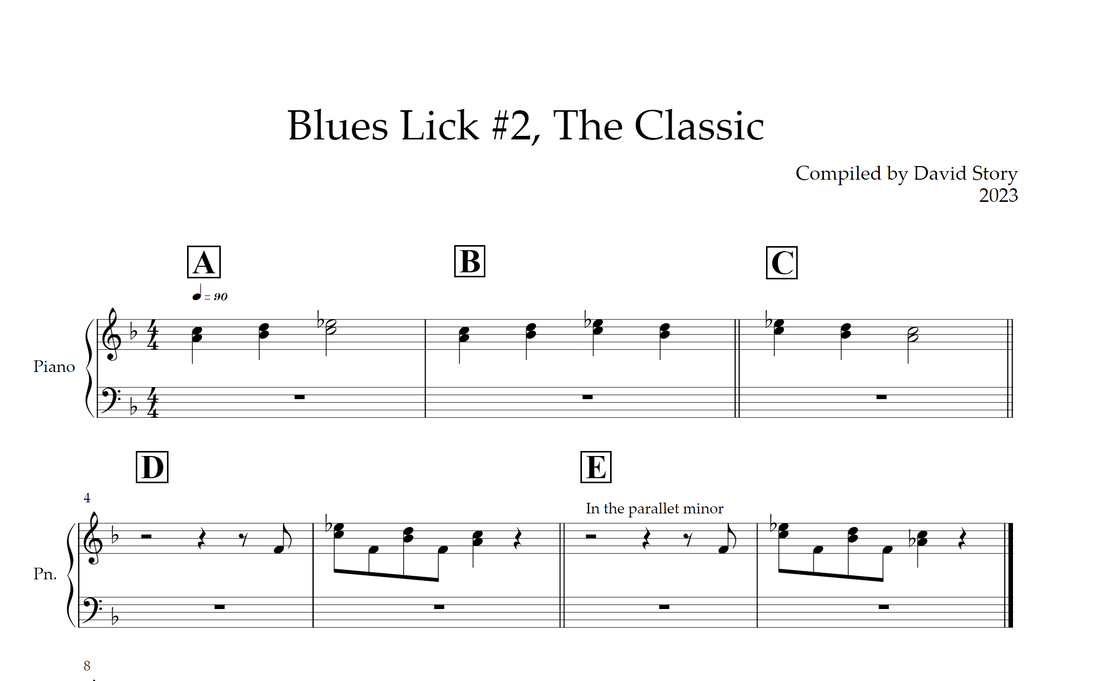
This lick can be found in numerous pieces. Below is a sampling. Sometimes it is played in the minor key. Sometimes it is sung in the chorus, sometimes it is fragmented on the introductions, sometimes it is played during a solo, and sometimes it is played on instrumental breaks. Horace Silver plays the lick thirteen times during his solo. See if you can locate them. 

Practice suggestions. 

1. Listen to each piece and locate the lick.
2. Figure out which key it is played in. 
3. Play the lick with the recording, coming in only when the lick is played. 

​David Story 
0 Comments

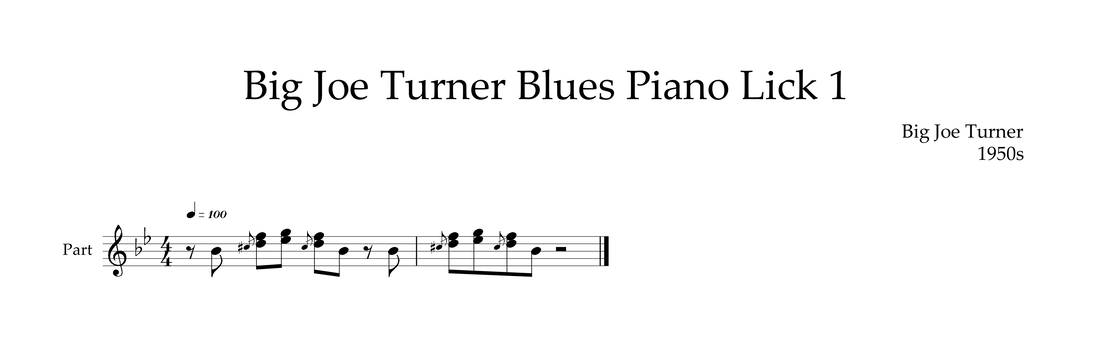
Big Joe Turner: Got You On My Mind Blues Lick Number 1

11/12/2013

0 Comments

 
Picture
This lick and its variations are found in countless blues recordings. This is one of my favorites. 

Cheers,

David Story

0 Comments
    You've got to learn your instrument. Then, you practice, practice, practice. And then, when you finally get up there on the bandstand, forget all that and just wail.
    Charlie Parker

    Author

    I'm a professional pianist and music educator in West Toronto Ontario. I'm also a devoted drum set and mallet percussionist. 

    Archives

    September 2025
    August 2025
    June 2025
    May 2025
    April 2025
    March 2025
    January 2025
    December 2024
    November 2024
    October 2024
    September 2024
    August 2024
    July 2024
    June 2024
    May 2024
    April 2024
    March 2024
    February 2024
    January 2024
    December 2023
    November 2023
    October 2023
    September 2023
    August 2023
    July 2023
    June 2023
    May 2023
    April 2023
    March 2023
    February 2023
    January 2023
    December 2022
    November 2022
    October 2022
    September 2022
    August 2022
    July 2022
    June 2022
    May 2022
    April 2022
    March 2022
    February 2022
    January 2022
    December 2021
    November 2021
    October 2021
    September 2021
    August 2021
    July 2021
    June 2021
    May 2021
    April 2021
    March 2021
    February 2021
    January 2021
    December 2020
    November 2020
    October 2020
    September 2020
    August 2020
    July 2020
    June 2020
    May 2020
    April 2020
    March 2020
    February 2020
    January 2020
    December 2019
    November 2019
    October 2019
    September 2019
    August 2019
    July 2019
    June 2019
    May 2019
    April 2019
    March 2019
    February 2019
    January 2019
    December 2018
    October 2018
    September 2018
    August 2018
    July 2018
    June 2018
    May 2018
    March 2018
    January 2018
    December 2017
    November 2017
    September 2017
    August 2017
    July 2017
    June 2017
    May 2017
    April 2017
    March 2017
    February 2017
    January 2017
    December 2016
    November 2016
    October 2016
    September 2016
    August 2016
    July 2016
    June 2016
    May 2016
    April 2016
    March 2016
    February 2016
    January 2016
    December 2015
    November 2015
    October 2015
    September 2015
    August 2015
    July 2015
    May 2015
    April 2015
    March 2015
    February 2015
    January 2015
    December 2014
    November 2014
    October 2014
    September 2014
    August 2014
    July 2014
    June 2014
    May 2014
    April 2014
    March 2014
    February 2014
    January 2014
    December 2013
    November 2013
    October 2013
    September 2013
    August 2013
    July 2013
    June 2013
    May 2013
    April 2013
    March 2013
    February 2013
    January 2013
    December 2012
    November 2012

    Categories

    All
    Adult Piano Lessons
    Blues Piano
    Breakfast Piano Minute
    Buying A Piano
    Children's Piano Lessons
    Classical Piano
    Ear Training
    Goal Setting
    Hobby Overload
    How To Practice Scales On The Piano
    Jazz Chops
    Jazz Piano
    Learning Classical Piano
    Learning Piano
    Learning Resources
    Motivation
    Music Practice
    Piano Exams
    Practice Organization
    Practicing Piano
    Starting Piano
    Stories
    Summer Piano Lessons
    Technique
    Theory
    Time Management
    Virtual Piano Lessons
    What Students Are Playing This Week

    RSS Feed

                                                ©2025 David Story
  • Homepage
  • Tips, Ideas, Stories, Free Lessons
  • Contact form, fees, calendar, policies
  • Adult Lessons
  • About Me
  • Children Lessons
  • Jazz and Blues Workshops 2024 2025
  • Philosophy
  • Testimonials
  • Student awards and compositions
  • Classical downloads
  • Classical outline for beginners
  • Jazz and Blues Downloads
  • Jazz outline for beginners
  • Children's Piano Recital
  • Video Library of Piano Techniques
  • Breakfast Piano Minute
  • Books, Apps, Websites, Music
  • Ear Training and Sight Singing Resources
  • My YouTube channel
  • Chord Voicings for Jazz Standards
  • Long and McQuade Teacher Workshop 2024